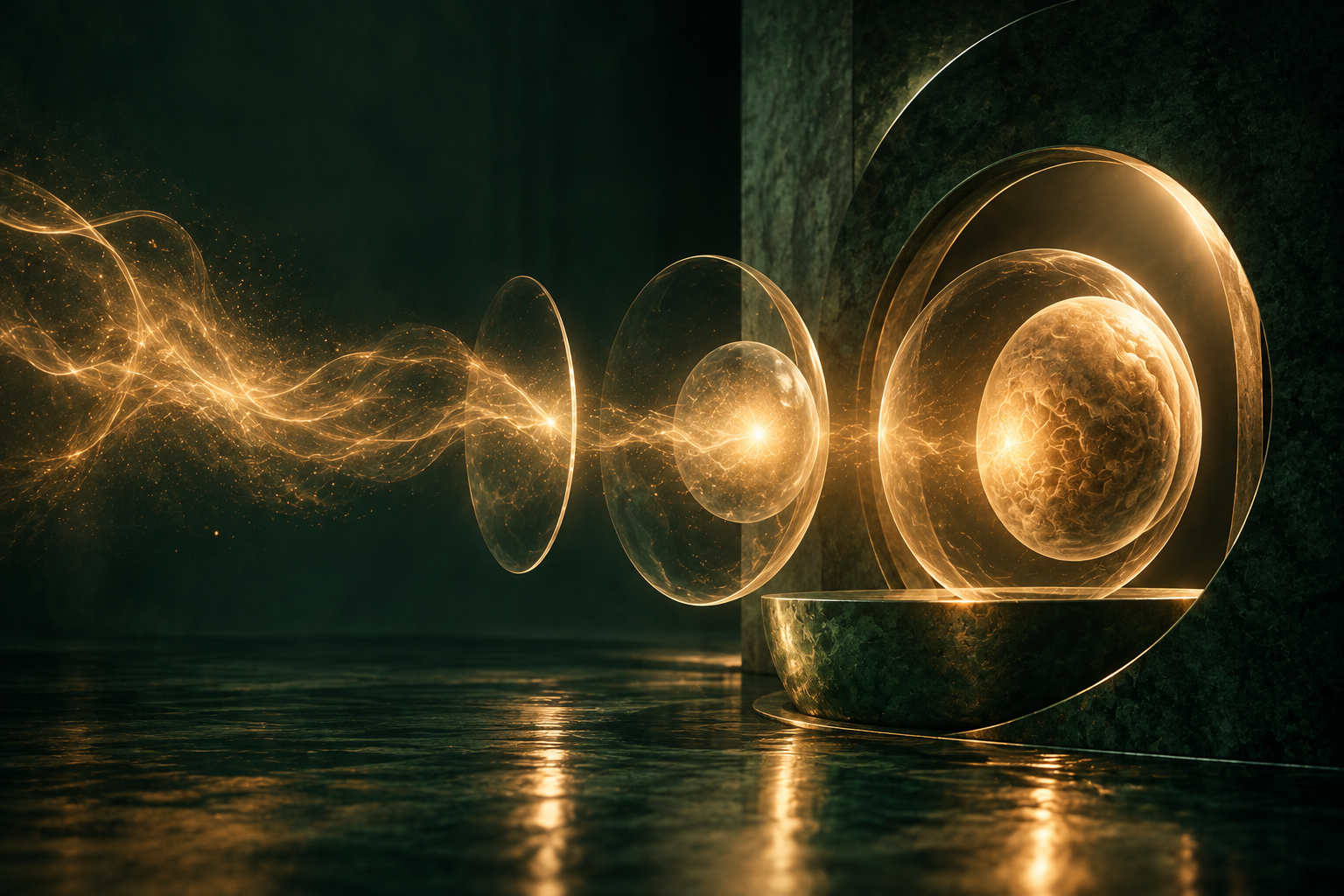
Every human being who enters this world has passed through a remarkable hidden journey. Before we could recognise a face, hear a voice or hold a newborn in our arms, life was already undergoing formation within a woman.
Her body received the developing human, sustained its growth, supplied the conditions for nourishment and protection, and carried that life towards the threshold of birth.
What does this extraordinary passage reveal about the relationship between spirit, woman and embodied life?
Biology helps us understand conception, implantation, gestation and birth. Scripture introduces another dimension by presenting the Creator as the ultimate giver of life and spirit. Together, these perspectives invite a deeper inquiry into the mystery of formation.
This is where our exploration begins: with the woman, the womb and the passage from hidden formation into visible human life.
If the Creator is Source,
what does the woman's body reveal about the passage into form?
01 · The Body Has Parents. Spirit Has Source.
Reproduction is not the same question as Source.
Genesis 2:7 introduces a profound relationship between material formation and the breath of life. The human is formed from the earth, receives the breath of life from the Creator and becomes a living being.
Job 33:4 also associates life with the Spirit and breath of the Creator, while Ecclesiastes 12:7 speaks of the spirit returning to the One who gave it.
These passages establish the scriptural foundation for our inquiry: the Creator is presented as the ultimate Source of life and spirit.
Human reproduction introduces another dimension of this mystery. Through the biological participation of man and woman, a new human organism begins to develop. Within the woman, that life then enters an extraordinary process of nourishment, protection and bodily formation.
The question before us is therefore not only where life originates, but how life is received, carried and brought into embodied expression.
Diagram 01 · From Source to Manifestation
The visible human stands at the end of a hidden journey.
02 · Before the Womb, There Is Source
Formation is not presented as the beginning of the Creator's knowing.
In Jeremiah 1:5, the Creator speaks to the prophet through a remarkable declaration:
“Before I formed you in the womb I knew you.”
The passage brings two dimensions of human existence into conversation: being known and being formed. Before Jeremiah entered the visible world, his life was already spoken of in relation to the Creator's knowledge and purpose.
The womb then appears within this scriptural account as the environment of embodied formation. What is known to the Creator enters a process through which a human life develops towards birth.
This does not establish a biological timetable for the entrance of spirit. Rather, it invites us to contemplate a relationship between divine knowledge, human formation and the purpose that unfolds through a life.
Before the world encounters a person, formation has already begun in hiddenness.
Scriptural Pattern
Genesis 2:7
Form · Breath · Living Being
Job 33:4
Spirit · Breath · Life
Jeremiah 1:5
Known · Formed · Born · Sent
Ecclesiastes 12:7
Body returns · Spirit returns to the Giver
03 · Man and Woman Reproduce the Form
Conception requires biological participation from both.
Human reproduction begins through the biological participation of man and woman. Each contributes genetic material to the formation of a new human organism.
Yet conception is only the beginning of a much longer journey. Once implantation occurs, the developing human enters an extraordinary relationship with the mother's body.
Through the developing placenta and the mother's physiological systems, oxygen and nutrients become available to sustain growth. Within the womb, cells differentiate, organs develop, and the foundations of a human body gradually take shape.
The woman is therefore not merely present at the beginning of reproduction. Her body provides the living environment in which gestation unfolds.
Within her, conception enters the remarkable journey of embodied formation.
This is one of the central insights of the Womb as Portal: the woman's reproductive architecture reveals how profoundly life depends upon reception, nourishment, protection and the conditions necessary for development.
Diagram 02 · Distinguishing the Roles
Source, reproduction, portal and manifestation are not the same thing.
Source
The Creator
Within the scriptural framework of this journal, spirit and the breath of life originate ultimately in the Creator.
Reproduction
Man + Woman
Both participate biologically in conception. Neither parent is presented here as the ultimate Source of spirit.
Portal
Woman + Womb
Within the woman, the conceived human passes through gestation, nourishment, protection and hidden bodily formation.
Manifestation
Birth
The child crosses the threshold from the concealed environment of the womb into externally visible human life.
Within her, life is received,
nourished and formed.
She carries the mystery of embodiment.
04 · The Woman Stands at the Threshold of Form
The womb is not Source. It is portal.
A portal marks a passage between one condition of existence and another. It is a threshold through which something enters a new environment.
The womb offers an extraordinary biological expression of this principle. Within its protected environment, a developing human undergoes the intricate processes of gestation, differentiation and growth.
The woman's body does more than provide physical space. Through maternal and placental physiology, it sustains the conditions necessary for development while preparing the growing child for life beyond the womb.
Throughout this hidden journey, formation is taking place. A heartbeat develops. Organs take shape. The body grows and gradually acquires the capacities needed for the transition into the world outside.
Birth marks that remarkable threshold: a human life that has been carried within the mother enters a new environment and begins another stage of existence.
The womb is therefore a portal of embodiment: a living environment through which hidden development progresses towards visible human emergence.
Diagram 03 · The Womb Between Worlds
The Hidden
Unseen Formation
Reception
Gestation
Nourishment
Protection
Development
The Revealed
Visible Emergence
Birth
Independent breathing
External encounter
Relationship
Manifest human presence
The portal does not originate Source.
It carries life across a threshold.
05 · The Unseen Does Not Mean the Unreal
Visibility may reveal a process already underway.
We often measure reality by what we can see. What has not appeared before us may seem distant, uncertain or even nonexistent. Yet the womb reveals something profoundly different about the nature of formation.
Long before pregnancy becomes externally apparent, biological development is already underway. Cells divide, implantation occurs, and the developing human begins an intricate journey of growth within the maternal environment.
Visibility does not initiate this process. It allows others to recognise something that has already been taking place.
This distinction offers a powerful formation insight. Many things of lasting value pass through a season in which their development is not immediately visible. Understanding matures before it becomes wisdom. Capacity develops before it finds expression. A meaningful work may require sustained preparation before its fruit can be encountered by others.
Hiddenness, however, should not be confused with inactivity. The formative stage requires appropriate conditions, nourishment, protection and time. What is developing must be cared for according to its nature.
The unseen is not necessarily absent. Sometimes what matters most is still undergoing formation.
The Principle of Hidden Formation
The unseen does not become real
when it becomes visible.
Visibility reveals what has already entered formation.
06 · Where Does Spirit Enter?
Scripture gives us Source without giving us a biological clock.
Having explored the womb as an environment of embodied formation, we arrive at a question that has occupied human reflection across generations:
At what point does spirit enter the developing human?
Scripture presents the Creator as the giver of life and spirit. It speaks of the human receiving the breath of life, of being known before formation in the womb, and of the spirit returning to its Giver.
Biology, meanwhile, allows us to observe the developing human through identifiable stages, including fertilization, implantation, organ development, fetal movement and birth. These observations reveal the remarkable progression of embodied life.
Yet neither these biological observations nor the scriptural passages examined here establish a measurable moment at which spirit enters the developing human.
We can therefore affirm the scriptural understanding of the Creator as Source while recognising that the precise relationship between spirit and biological development remains a matter of interpretation and mystery.
The absence of a precise timetable does not diminish the wonder of formation. It invites us to approach the mystery of embodied life with reverence, intellectual care and humility.
Scripture · Biology · Formation Insight
Scripture
The Creator is presented as the giver and ultimate Source of life, breath and spirit. Scripture also speaks of hidden formation in the womb.
Biology
Man and woman contribute to conception. Gestation occurs within the woman, where the developing human is sustained through maternal and placental physiology until birth.
Formation Insight
“Womb as Portal” interprets this embodied architecture as a pattern of passage: Source, reception, hidden formation, threshold and manifestation.
07 · Birth Is a Change of Mode
The child is alive before the first independent breath.
Birth is one of the most extraordinary transitions in human existence. For months, the developing child has been sustained within the maternal environment, receiving oxygen and nutrients through the placenta and umbilical cord.
During this period, the child's lungs are developing, but they are not yet responsible for breathing atmospheric air. The mother's body, working through the placenta, sustains the conditions necessary for life and growth.
Then comes the threshold of birth. As the newborn begins breathing, the lungs expand, circulation undergoes significant changes, and the child begins adapting to life outside the womb.
The child has not moved from biological nonexistence into existence. A living human being has passed from one environment and mode of physiological dependence into another stage of life.
This transition reveals something profound about the womb's formative purpose. It does not merely contain developing life. It provides the environment in which that life grows and prepares for a world it has not yet encountered.
Birth reveals what the woman has carried through hidden formation. The portal has brought life across a remarkable threshold.
As a formation insight, this passage reminds us that maturity often requires a change in the conditions that once sustained us. What nurtures a beginning must also prepare it for the responsibilities and possibilities of its next stage.
Diagram 04 · The Threshold of Birth
Within
Carried Life
Hidden gestation · placental oxygenation · maternal nourishment · protected development
→
Birth
Beyond
Breathing Life
Expanded lungs · independent respiration · external relationship · visible presence
08 · She Reproduces the Seed From Source
The portal carries what it does not ultimately originate.
We now arrive at the central spiritual proposition of this journal: the woman participates in a remarkable passage through which human life is received, carried, formed and brought into the visible world.
The Creator is understood within our scriptural framework as the ultimate Source of life and spirit. Man and woman participate biologically in reproduction, while the mother's body provides the environment in which gestation unfolds.
Within her, a new human generation is nourished and sustained. Through the intricate work of maternal and placental physiology, the developing human passes through successive stages of bodily formation.
This is the embodied mystery that gives the Womb as Portal its central image. The woman receives developing life, carries it through hidden formation and participates in bringing another human being into the world.
When we speak of reproducing the seed from Source, we are expressing a spiritual interpretation of this reproductive journey. The seed represents life's potential; the womb reveals the architecture through which that potential enters embodied development.
She carries life through the formative passage between conception and birth. Within her, another generation is prepared to enter the world.
And within this extraordinary biological reality, we recognise a wider formation principle: what is received must be nurtured, what is carried must be protected, and what is forming must be given the conditions necessary to reach maturity.
Diagram 05 · The Eternal Mission
Continuity requires passage.
Generation after generation, the individuals change while the reproductive passage continues. This is the sense in which this journal speaks of an enduring or eternal mission of the feminine reproductive architecture: not as the compulsory destiny of every individual woman, but as a continuing human pathway through which generations are carried into birth.
09 · The Pattern Extends Beyond Pregnancy
The biological womb reveals a larger formation principle.
The biological womb reveals an extraordinary architecture of formation. It receives developing life, sustains its growth, provides protection and carries it towards the threshold of birth.
Yet the significance of this architecture invites us to consider a wider question: what does it mean to nurture something entrusted to our care until it reaches maturity?
This is where the embodied reality of the womb opens into the broader feminine principle.
Receive → Carry → Protect → Nurture → Form → Release
These capacities are not confined to pregnancy. They can find expression in the formation of children, the cultivation of wisdom, the preservation of memory, the building of communities and the development of ideas that bring meaningful change into the world.
A woman may express this formative capacity through biological motherhood, but her worth and contribution are never dependent upon becoming a mother. Her intelligence, discernment, creativity, protection, leadership and capacity to nurture life remain significant in their own right.
Nor is the feminine principle merely an abstract metaphor detached from the female. The woman's embodied experience gives this inquiry its starting point, while the principle helps us recognise formation wherever potential is responsibly received and brought towards maturity.
Formation is the responsible work between receiving potential and bringing it into mature expression.
This is part of the invitation of the Feminine Renaissance: to remember the life-giving capacities that sustain human existence, restore their rightful place in our understanding of womanhood and human formation, and manifest them through purposeful action.
Manifestation Requires Discernment
Not every idea we receive is worthy of manifestation.
Reception
What have I received?
Discernment
Is it worthy of being carried?
Gestation
What must remain protected while it forms?
Nurture
What conditions does maturity require?
Timing
Is it ready to cross the threshold?
Fruit
What will its manifestation produce?
Formation Insight
The Creator is Source.
The womb is portal.
The human is manifestation.
Within the woman's body, developing human life passes through an extraordinary journey of nourishment, protection and formation before entering the world through birth.
This embodied architecture gives the Womb as Portal its central formation insight: receiving life is only the beginning. What has been received must be sustained according to its nature and given the conditions necessary for development.
Beyond biological reproduction, this principle invites us to reconsider how we nurture human potential, cultivate wisdom, preserve memory and prepare future generations.
The purpose of formation is not merely to carry potential, but to nurture it towards meaningful expression.
Carry This With You
What is being formed within your care?
The journey from hiddenness to manifestation invites us to examine how we receive, nurture and bring forth what has been entrusted to us. Consider these questions in relation to your own life, work and responsibilities.
Reception — What potential, responsibility or meaningful work have I received that requires my attention?
Recognition — Have I dismissed something valuable simply because its progress is not yet visible?
Protection — What is still developing and needs appropriate boundaries rather than premature exposure?
Nurture — What conditions, resources, relationships or disciplines are necessary for its healthy formation?
Discernment — What am I carrying out of fear, pressure or obligation that no longer deserves my continued investment?
Threshold — What has reached sufficient maturity to move beyond preparation into purposeful expression?
Honour the hidden work of formation. Give what is growing the care it requires. Recognise when it is time to bring it forth.
From Spirit to Form · Closing
Before the world receives a life,
the woman has carried its formation.
Within her, the developing human passes through a remarkable journey of nourishment, protection and growth. What begins beyond public view gradually acquires the form and capacities necessary to enter the world through birth.
Source gives.
The womb receives.
Formation unfolds.
Birth reveals.
And through this extraordinary passage, we encounter a principle that reaches beyond biological reproduction: life must be received with discernment, nurtured with responsibility and given the conditions necessary to reach maturity.
The portal does not merely reveal life. It reveals the importance of everything required to bring life into form.
Continue the Collection
The Motherline
Mitochondria and the Architecture of Continuity
If the womb reveals the mystery of formation, the motherline raises another question: how does biological continuity travel through generations?
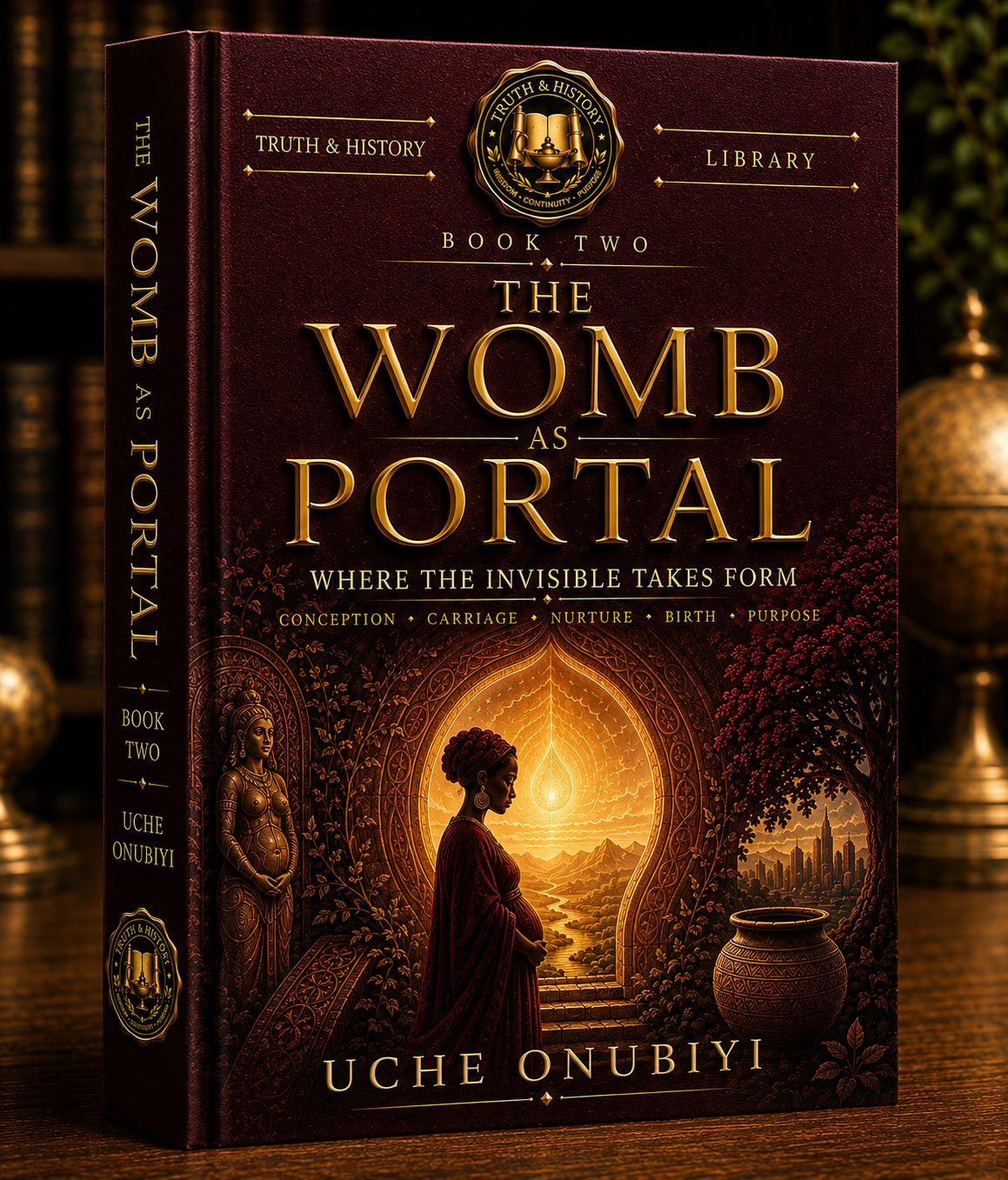
Continue the Exploration
Womb as Portal
Go deeper into the womb as portal, the feminine principle of reception and formation, the movement from potential into embodiment, continuity, nurture and the responsibility of bringing life to maturity.
Explore the Truth & History Library ↗